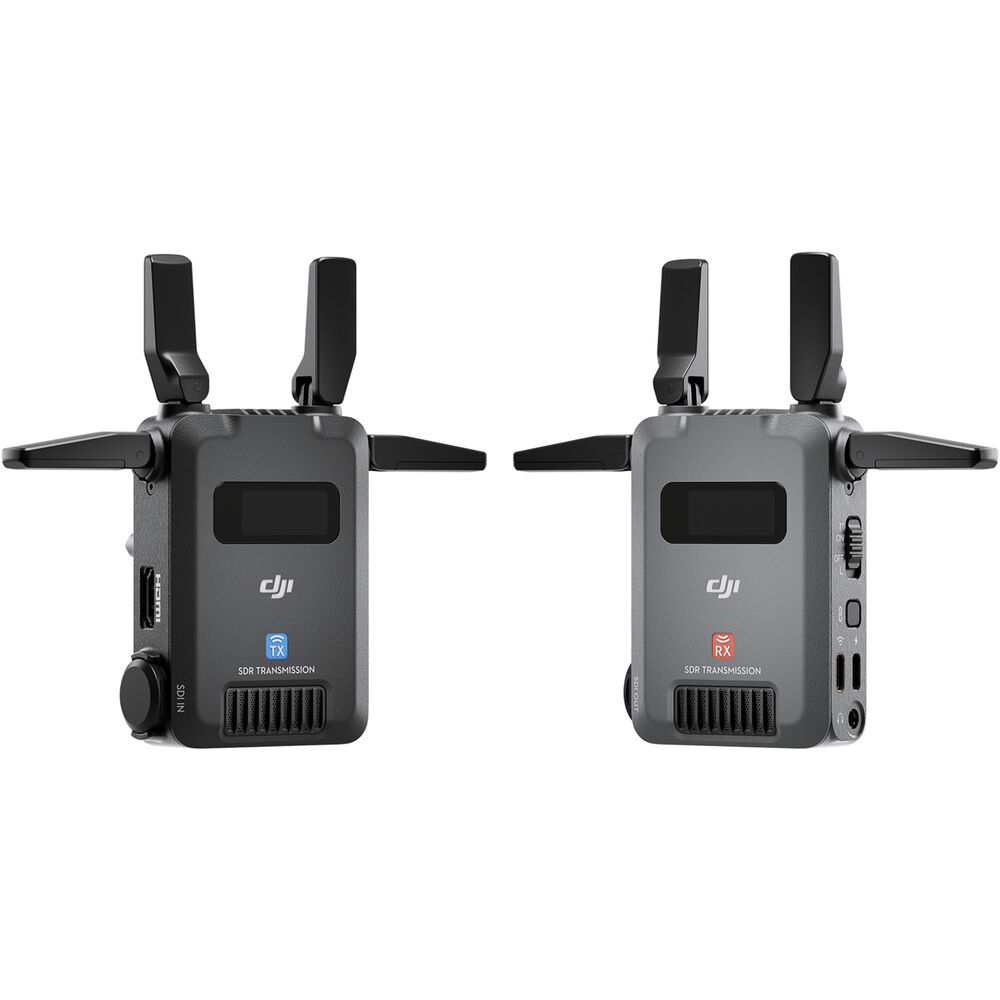
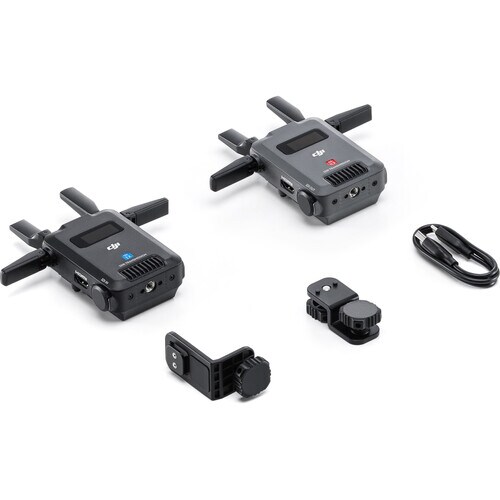
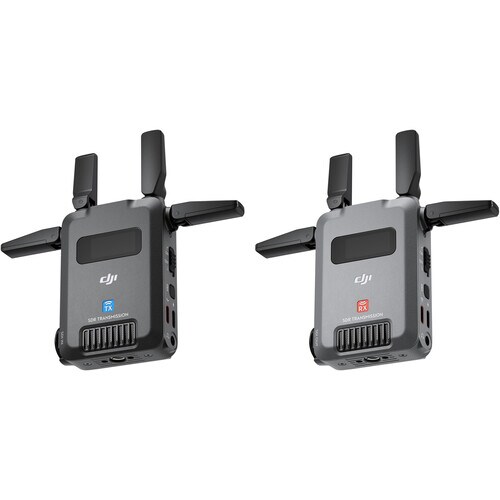
The DJI SDR Transmission Combo delivers stable, high-quality video transmission on a small-to-medium-sized shooting set. The SDR Transmission Transmitter from DJI is designed for long-range transmission of footage up to 1080p60 resolution using DJI’s proprietary technology. SDR (Software Defined Radio) transmission uses a tri-bandwidth (DFS, 2.4 GHz, and 5.8 GHz) automatic frequency-hopping system, resulting in high penetration and distances up to 3 kilometres. The system is ideal for transmitting footage from a camera rig to an unlimited number of receivers or mobile devices, especially on crowded sets or around dense architecture that would otherwise overwhelm a conventional consumer Wi-Fi-based solution.
Robust Transmission up to 3 Kilometers
The DJI SDR Transmission transmitter can reach up to 3 kilometres using its proprietary SDR technology, which accommodates wide, dynamic filming areas. It has a minimal latency of just 35 ms, ensuring smooth monitoring and extended reach.
High-Quality Image Transmission
The system supports video transmission with up to 1080p60 resolution with a high bit rate of up to 20 Mb/s, ensuring smooth monitoring and collaboration with high image detail, crisp audio, and vivid colour.
Seamless Auto-Frequency Hopping
SDR technology supports seamless auto-frequency hopping across the 2.4 GHz, 5.8 GHz, and DFS frequency bands. In case of interference, it can automatically switch to the cleanest channel when operating in complex environments with many obstacles.
When the SDR Transmission system is connected to the app in SDR Control mode or Wi-Fi mode, users can also manually switch channels within the app and monitor channel quality simultaneously.
Unlimited Number of Receivers
In Broadcast mode, each transmitter can connect to an unlimited number of receivers, providing a high-quality monitoring experience for multiple collaborators and meeting the independent monitoring needs of various professional roles.
Metadata Transmission
SDR Transmission supports metadata transmission from mainstream cinema cameras like ARRI and RED via the SDI input. This provides directors, cinematographers, and DIT teams with quick access to detailed camera information in real-time.
Voice Call
The Voice Call feature enables one-on-one real-time voice communication between the receiver and transmitter, allowing for seamless conversations between the cinematographer and the director or client at any time.
Camera/Gimbal Control
The SDR Transmission system supports PTP control over cameras, displaying and adjusting aperture, shutter, ISO, and even triggering the camera’s photo-taking and video-recording functions through the app. It also supports CEC control for Sony cameras using Mirror Control mode. See the DJI SDR Transmission Camera Compatibility list for compatible cameras.
When connected to a gimbal, it also supports Force Mobile, virtual joystick, and gimbal recentering functions when connected to the gimbal via the app.
Versatile USB-C Port
The transmitter supports multiple monitoring methods and can output three SDR and two Wi-Fi signals simultaneously. The receiver can output to monitors via SDI/HDMI, and the transmitter also allows for direct connection to smartphones or tablets over Wi-Fi for added compatibility. The receiver can also utilize a USB-C output with a USB-C cable to directly connect the receiver to a smartphone or tablet for smooth and stable monitoring.
Camera Source Switching
When the transmitter is connected to the DJI Ronin app in Broadcast mode, users can seamlessly switch between camera sources within the app to quickly monitor different cameras.
App Monitoring Tools
The app supports local recording and playback, and recorded content can be reviewed on the playback page. It also supports mainstream monitoring assistance tools such as LUTs, peaking, waveform, and false colour, delivering a professional monitoring experience.
Power Options
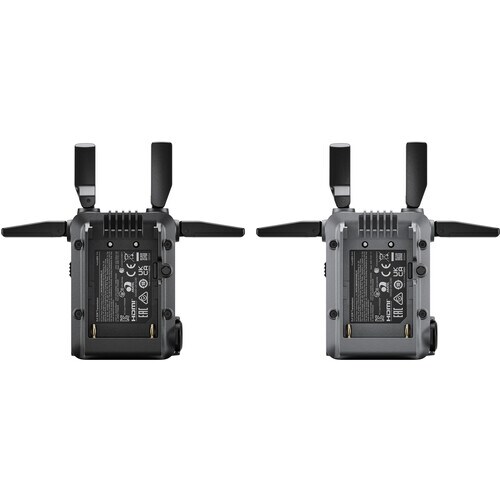
The transmitter can be powered directly via a USB-C cable using a USB PD fast charger, a standard USB power supply, or via an L-series battery using its built-in port on the back.
The transmitter also includes a gimbal adapter mount, and when used with the DJI RS 4 Pro, RS 4, or RS 3 Pro, the transmitter can be mounted on the gimbal and powered directly by it, eliminating the need for a separate battery.
DJI SDR Transmission Receiver
For stable, high-quality video transmission on a small-to-medium-sized shooting set, the SDR Transmission Receiver from DJI is designed for long-range transmission of footage up to 1080p60 resolution using DJI’s proprietary technology. SDR (Software Defined Radio) transmission uses a tri-bandwidth (DFS, 2.4 GHz, and 5.8 GHz) automatic frequency-hopping system, resulting in high penetration and distances up to 3 kilometres. The system is ideal for transmitting footage from a camera rig to an unlimited number of receivers or mobile devices, especially on crowded sets or around dense architecture that would otherwise overwhelm a conventional consumer Wi-Fi-based solution.
Robust Transmission up to 3 Kilometers
The DJI SDR Transmission receiver can receive wireless video from up to 3 kilometres from a transmitter using its proprietary SDR technology, which accommodates wide, dynamic filming areas. It has a minimal latency of just 35 ms, ensuring smooth monitoring and extended reach.
High-Quality Image Transmission
The system supports video transmission with up to 1080p60 resolution with a high bit rate of up to 20 Mb/s, ensuring smooth monitoring and collaboration with high image detail, crisp audio, and vivid colour.
Seamless Auto-Frequency Hopping
SDR technology supports seamless auto-frequency hopping across the 2.4 GHz, 5.8 GHz, and DFS frequency bands. In case of interference, it can automatically switch to the cleanest channel when operating in complex environments with many obstacles.
When the SDR Transmission system is connected to the app in SDR Control mode or Wi-Fi mode, users can also manually switch channels within the app and monitor channel quality simultaneously.
Unlimited Number of Receivers
In Broadcast mode, each transmitter can connect to an unlimited number of receivers, providing a high-quality monitoring experience for multiple collaborators and meeting the independent monitoring needs of various professional roles.
Metadata Transmission
SDR Transmission supports metadata transmission from mainstream cinema cameras like ARRI and RED via the SDI input. This provides directors, cinematographers, and DIT teams with quick access to detailed camera information in real-time.
Voice Call
The Voice Call feature enables one-on-one real-time voice communication between the receiver and transmitter, allowing for seamless conversations between the cinematographer and the director or client at any time.
Camera/Gimbal Control
The SDR Transmission system supports PTP control over cameras, displaying and adjusting aperture, shutter, ISO, and even triggering the camera’s photo-taking and video-recording functions through the app. It also supports CEC control for Sony cameras using Mirror Control mode. See the DJI SDR Transmission Camera Compatibility list for compatible cameras.
When connected to a gimbal, it also supports Force Mobile, virtual joystick, and gimbal recentering functions when connected to the gimbal via the app.
Versatile USB-C Port
The transmitter supports multiple monitoring methods and can output three SDR and two Wi-Fi signals simultaneously. The receiver can output to monitors via SDI/HDMI, and the transmitter also allows for direct connection to smartphones or tablets over Wi-Fi for added compatibility. The receiver can also utilize a USB-C output with a USB-C cable to directly connect the receiver to a smartphone or tablet for smooth and stable monitoring.
Camera Source Switching
When the receiver is connected to the DJI Ronin app in Broadcast mode, users can seamlessly switch between camera sources within the app to quickly monitor different cameras.
App Monitoring Tools
The app supports local recording and playback, and recorded content can be reviewed on the playback page. It also supports mainstream monitoring assistance tools such as LUTs, peaking, waveform, and false colour, delivering a professional monitoring experience.
Power Options
The receiver can be powered directly via a USB-C cable using a USB PD fast charger, a standard USB power supply, or via an L-series battery using its built-in port on the back.
When used with the DJI RS 4 Pro, RS 4, or RS 3 Pro, the transmitter or receiver can be mounted on the gimbal and powered directly by it, eliminating the need for a separate battery.

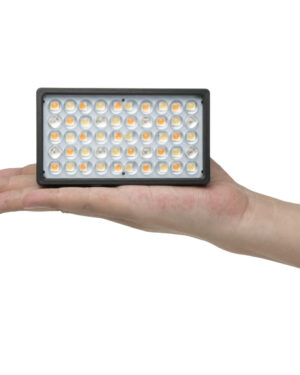 Nanlite Litolite 5C LED Panel Handheld RGBWW 7W
1 × $119.00
Nanlite Litolite 5C LED Panel Handheld RGBWW 7W
1 × $119.00 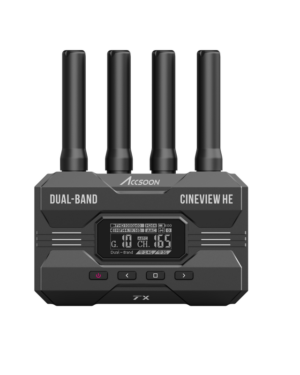 Accsoon CineView HE (Transmitter Only)
1 × $309.00
Accsoon CineView HE (Transmitter Only)
1 × $309.00  AVE IsoSquare Eggshell Acoustic Foam - 10 Pieces
1 × $49.00
AVE IsoSquare Eggshell Acoustic Foam - 10 Pieces
1 × $49.00  Leofoto LCH-2S Laptop Tray
1 × $101.00
Leofoto LCH-2S Laptop Tray
1 × $101.00  BlackRapid FR-T1 FastenR Tripod Breathe
1 × $40.00
BlackRapid FR-T1 FastenR Tripod Breathe
1 × $40.00  Inox MX3 Lubricant 300g
1 × $14.30
Inox MX3 Lubricant 300g
1 × $14.30  Tenba Tools Cable Pouch Duo 8 Double Sided Blue
1 × $38.50
Tenba Tools Cable Pouch Duo 8 Double Sided Blue
1 × $38.50  Peak Design Slide V3 Camera Strap - Black
1 × $109.00
Peak Design Slide V3 Camera Strap - Black
1 × $109.00 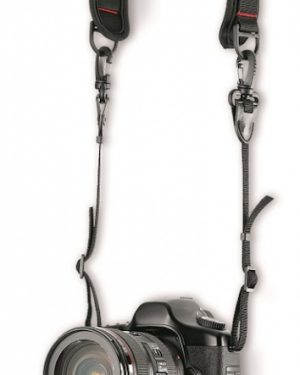 Manfrotto Camera Strap PL Manfrotto Pro-Light
1 × $22.80
Manfrotto Camera Strap PL Manfrotto Pro-Light
1 × $22.80 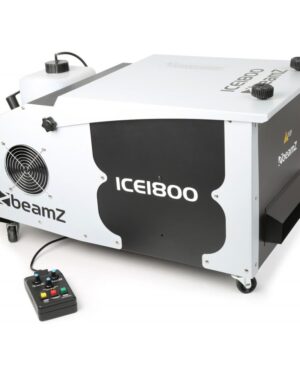 Beamz ICE1800 Low Lying Smoke Machine 1800W
1 × $449.00
Beamz ICE1800 Low Lying Smoke Machine 1800W
1 × $449.00 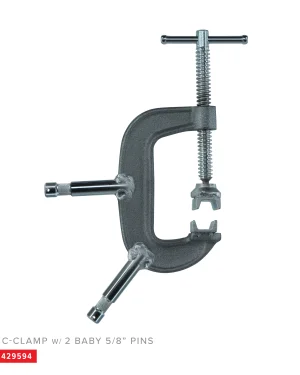 Matthews C-Clamp WMT 2X Pin 4.0''
1 × $126.00
Matthews C-Clamp WMT 2X Pin 4.0''
1 × $126.00 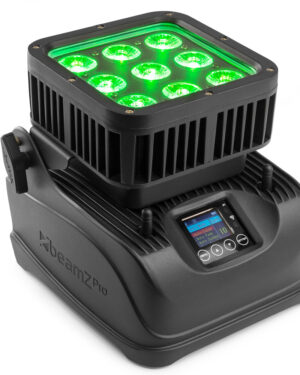 BeamZ PRO StarColour72B IP65 LED Flood Light w Battery Pack
1 × $699.00
BeamZ PRO StarColour72B IP65 LED Flood Light w Battery Pack
1 × $699.00 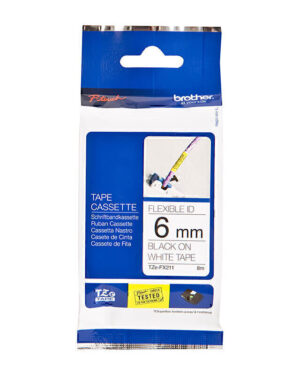 Brother TZeFX211 Flexible Tape 6mm x 8m Black on White
1 × $36.25
Brother TZeFX211 Flexible Tape 6mm x 8m Black on White
1 × $36.25 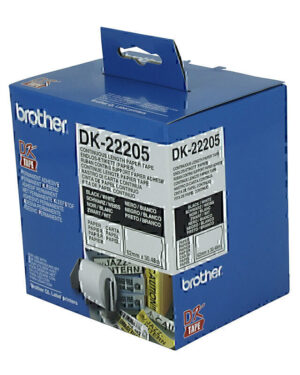 Brother DK22205 White Roll 62mm x 30.48 metres
1 × $43.95
Brother DK22205 White Roll 62mm x 30.48 metres
1 × $43.95 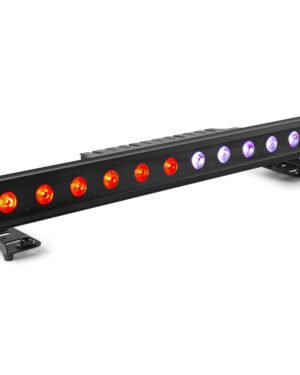 BeamZ LCB1215IP LED Bar IP65 12x 15W 6-in-1 LEDS
1 × $949.00
BeamZ LCB1215IP LED Bar IP65 12x 15W 6-in-1 LEDS
1 × $949.00 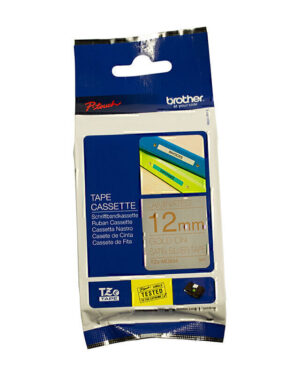 Brother TZeMQ934 Label Tape 12mm x 5m Gold on Satin Silver
1 × $27.49
Brother TZeMQ934 Label Tape 12mm x 5m Gold on Satin Silver
1 × $27.49  Rosco Lens Cleaner 234mL
1 × $41.00
Rosco Lens Cleaner 234mL
1 × $41.00 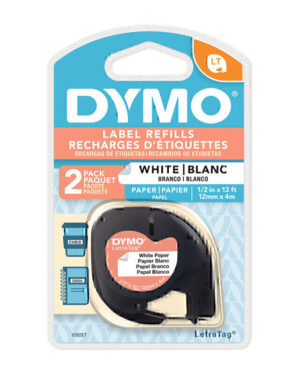 Dymo LT Paper 12mm x 4m Wh 2pk
1 × $17.50
Dymo LT Paper 12mm x 4m Wh 2pk
1 × $17.50 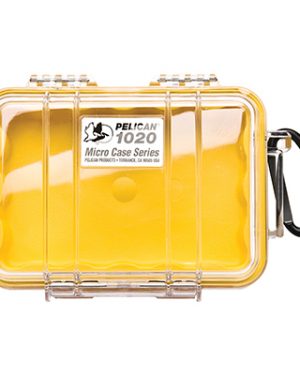 Pelican 1020 Micro Case Clear With Yellow
1 × $62.90
Pelican 1020 Micro Case Clear With Yellow
1 × $62.90 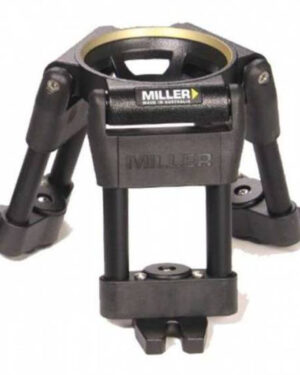 Miller Hi Hat 100mm
1 × $537.00
Miller Hi Hat 100mm
1 × $537.00  Dymo DY LW Dur MP Label 59x190mm
1 × $161.70
Dymo DY LW Dur MP Label 59x190mm
1 × $161.70 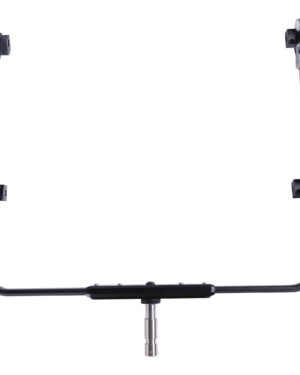 Aputure Nova P600C Dual Head Yoke
1 × $589.00
Aputure Nova P600C Dual Head Yoke
1 × $589.00 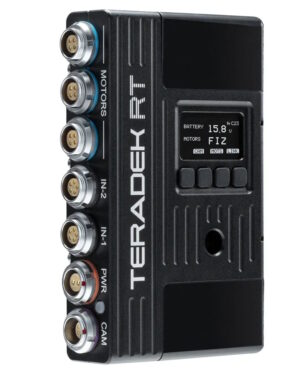 Teradek RT MDR.X Three-Channel Lens Control Receiver with Bluetooth
1 × $2,620.00
Teradek RT MDR.X Three-Channel Lens Control Receiver with Bluetooth
1 × $2,620.00